Geology & Chalk

The rocks of Sussex and surrounding areas are from the Cretaceous era 145-66 million years ago.

The Cretaceous seascape where the chalk was born

Winter Wind by Martin Brady courtesy of SDNPA

The rocks of Sussex and surrounding areas are from the Cretaceous era 145-66 million years ago. The Cretaceous name is actually derived from the French and Latin word for chalk which is Creta.

During the Cretaceous dinosaurs were walking on the land, the area that is now southeast England was underwater at various depths. It was located on the edge of the giant supercontinent, Pangea, around 40°N, which is equivalent to the latitude of the Mediterranean Sea today.

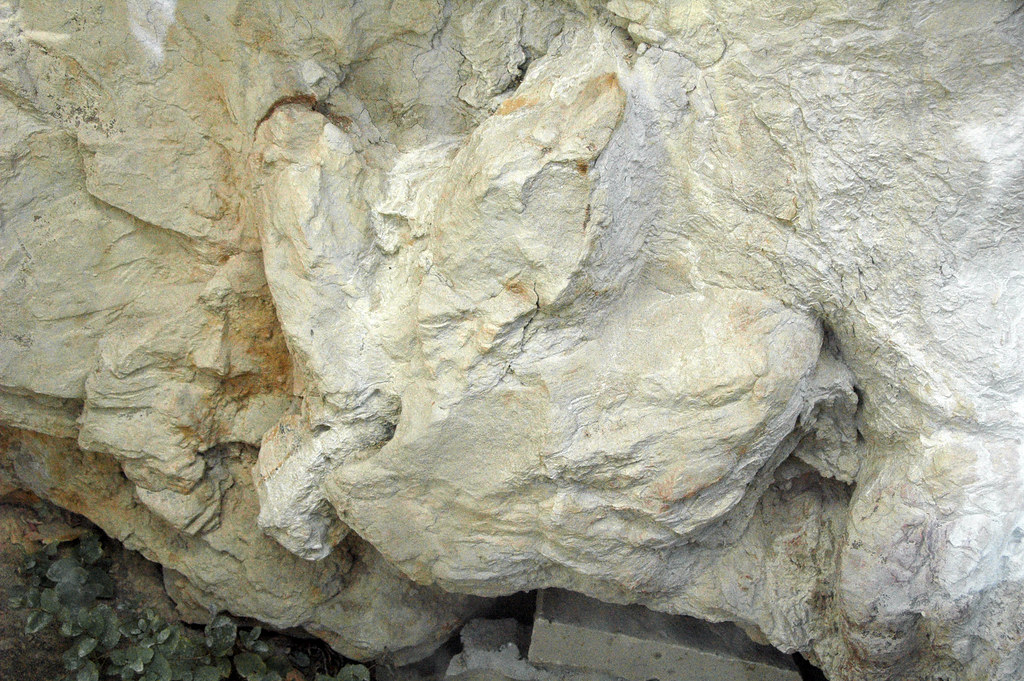
Look carefully at the image below to find a Tyrannosaurus Rex footprint from the upper Cretaceous period.

Inferred Tyrannosaurus rex footprint (Laramie Formation, Upper Cretaceous; Parfet Prehistoric Preserve, Golden, Colorado, USA) 1" by James St. John is licensed under CC BY 2.0.

Global sea levels during these times were often over 200 meters higher than they are today. As the sea moved in and out at different depths, different sedimentary rocks were deposited all over the area. Sandy shores and sandstones and were deposited near the coast, clay was deposited in shallower waters, and chalk was deposited in deeper waters.

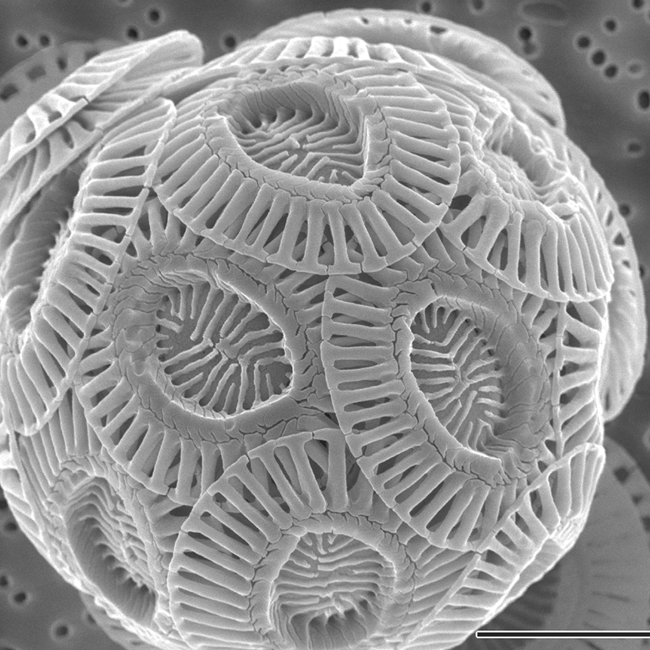
The purity of the chalk indicates that it formed far from land, virtually free of terrestrial sands and silts that would otherwise have coloured it. Chalk is largely composed of the skeletal remains of planktonic algae known as coccolithophores. These tiny organisms accumulated to form a white ooze on the seafloor. This soft sediment was later compacted and hardened to form chalk, a relatively soft rock. Coccolithophores are so tiny that around 200,000 of them could fit onto a single pinhead.

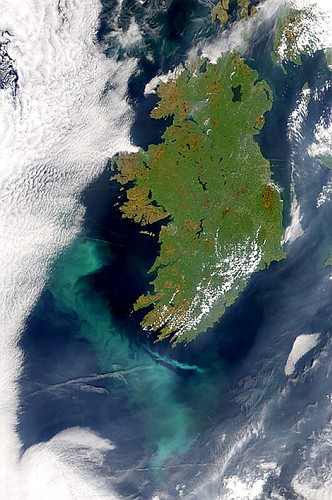
They fascinating and beautiful and have become an important artistic motif in Walk the Chalk! The images below show them under a microscope, and blooming in the sea – as they still do today.

Emiliania huxleyi coccolithophore (PLoS) by Alison R. Taylor (University of North Carolina Wilmington Microscopy Facility) is licensed under CC BY 2.5.
Coccolithophore Bloom Southwest of Ireland" by NASA Goddard Photo and Video is licensed under CC BY 2.0.

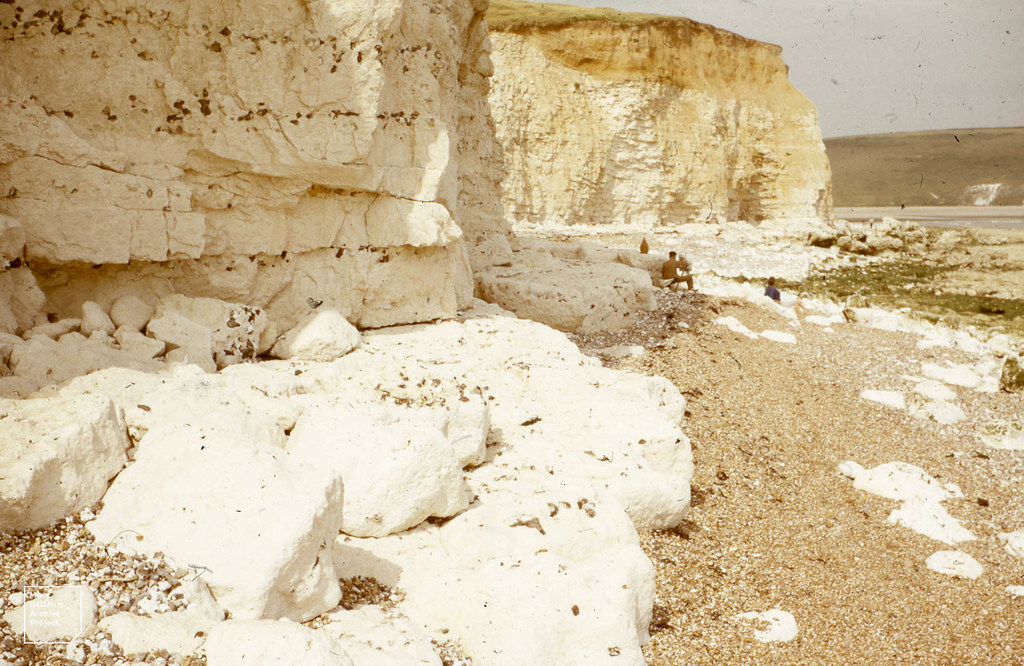
Among the chalk we can also find nodules and layers of flint. Flint is composed of silica, which was originally derived from the dissolved remains of sea sponges and siliceous planktonic micro-organisms. As the chalk was buried, the flint filled burrows and cavities and enveloped the remains of marine creatures. The flint then dehydrated and hardened into microscopic quartz crystals.

Horizontal flint beds (silicious sponge spicules). Brown flows - Miocene/Pleistocene Seaford Head, Sussex, 02/07/62 by Mary Gillham Archive Project is licensed under CC BY 2.0.

Wealden anticline & Erosion

Over the last 65 million, years the African plate has been colliding with Europe and as a biproduct it has caused the Alps mountain range with ripples creating the local Wealden anticline. This was once a vast dome of chalk laid over alternating clay and sandstone, covering much of Sussex, Hampshire and Kent.

Over time and once clear above the ocean the centre of the dome was eroded leaving just the edges as a range of hills to the north and south which we know as the North and South Downs.

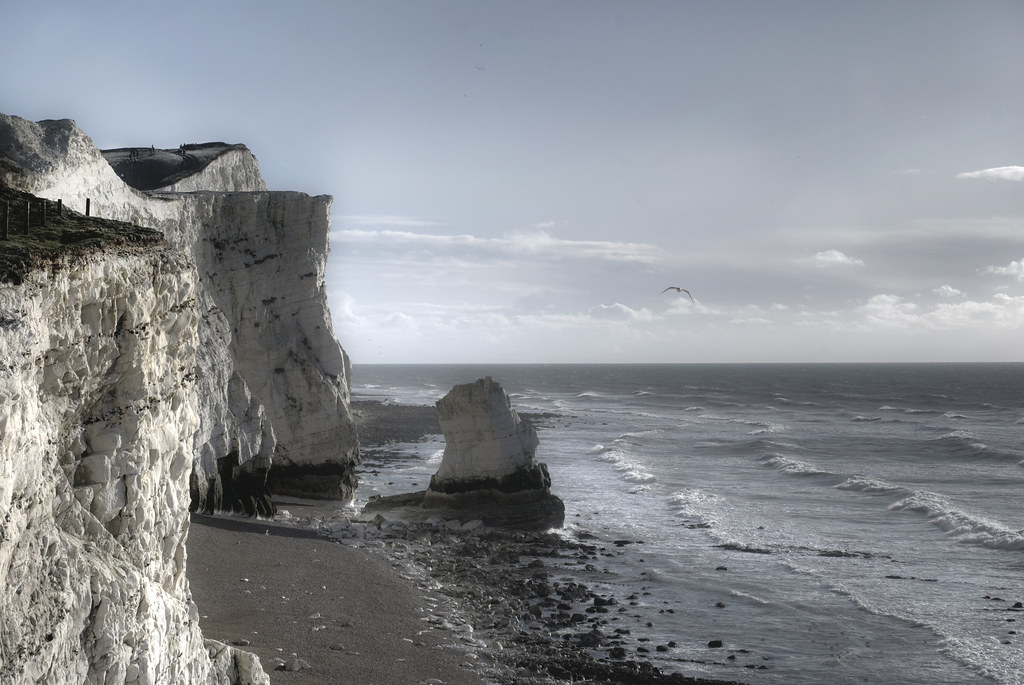
Rivers carved their way through the chalk downs at Seaford/ Newhaven and Cuckmere etc. and  along with ice age periglacial conditions created shallower undulating valleys in the soft chalk which today can be seen as The Seven Sisters.

Seven Sisters by Elaine Higgins courtesy of SDNPA

The Chalk aquifer of the South Downs

Chalk is an aquifer, which means that it is able to soak up and hold water – a bit like a sponge. Water can also move through the chalk in cracks called fissures.

The Chalk aquifer of the South Downs is vast, it runs roughly parallel to the south coast of England between Eastbourne in the east and Poole harbour in the west. The Chalk is highest in the north of the area and dips south towards the English Channel. It is divided into five areas, or ‘blocks’ defined by a series of roughly north-south trending river valleys. This is one of the best studied aquifers in the world and water levels in Sussex have been recorded for nearly 200 years.

Most of our drinking water in areas of Chalk across Southern England  comes from the chalk Aquifers (100% in many places) which supplying around 1.2m people. The clear cool water that emerges from the chalk as springs, streams and rivers is also home to a rare and unique ecosystem present only in parts of England and Northern France and Denmark.  The chalk acts as a temporary reservoir by regulating the amount of water supplied to the springs as levels of groundwater rise and fall with the seasons giving rise to seasonal springs like the Winterbourne in Lewes.

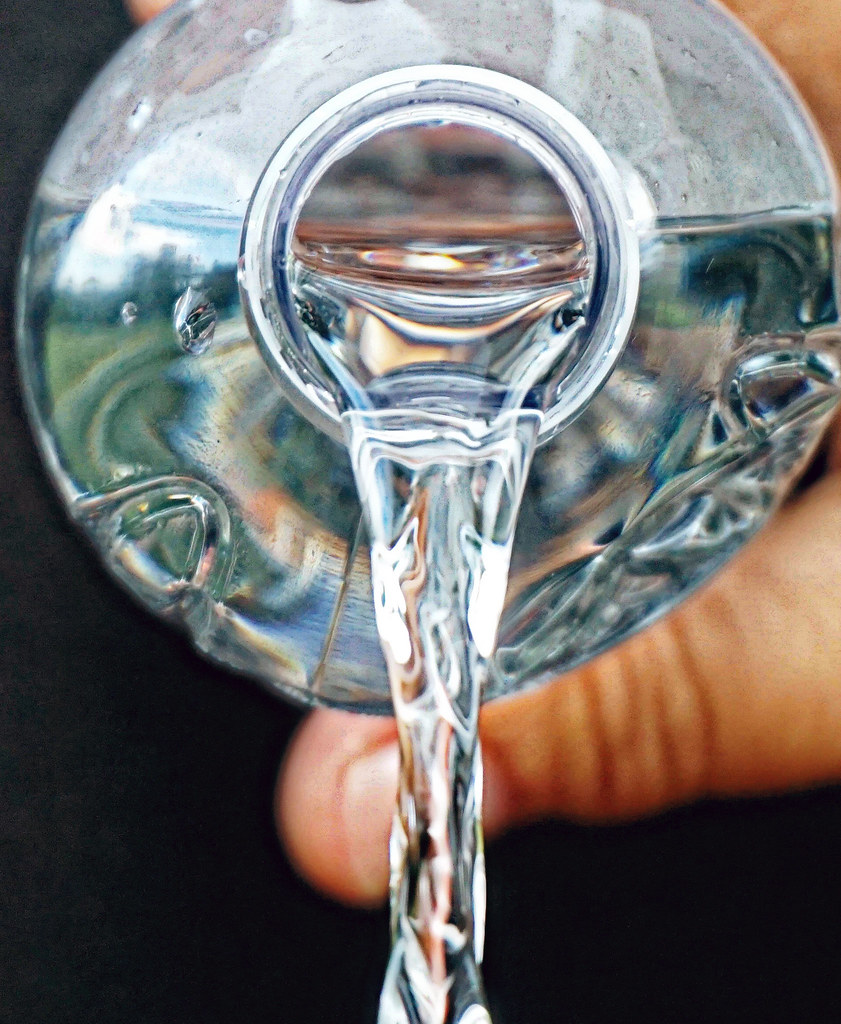
"Drink more water" by katerha is licensed under CC BY 2.0.

Fossils and where to find them

The Chalk cliffs and foreshore Around the Seven Sisters area reveals a diverse ecosystem dating from the Late Cretaceous epoch, 87-84 million years ago

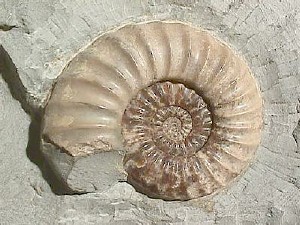
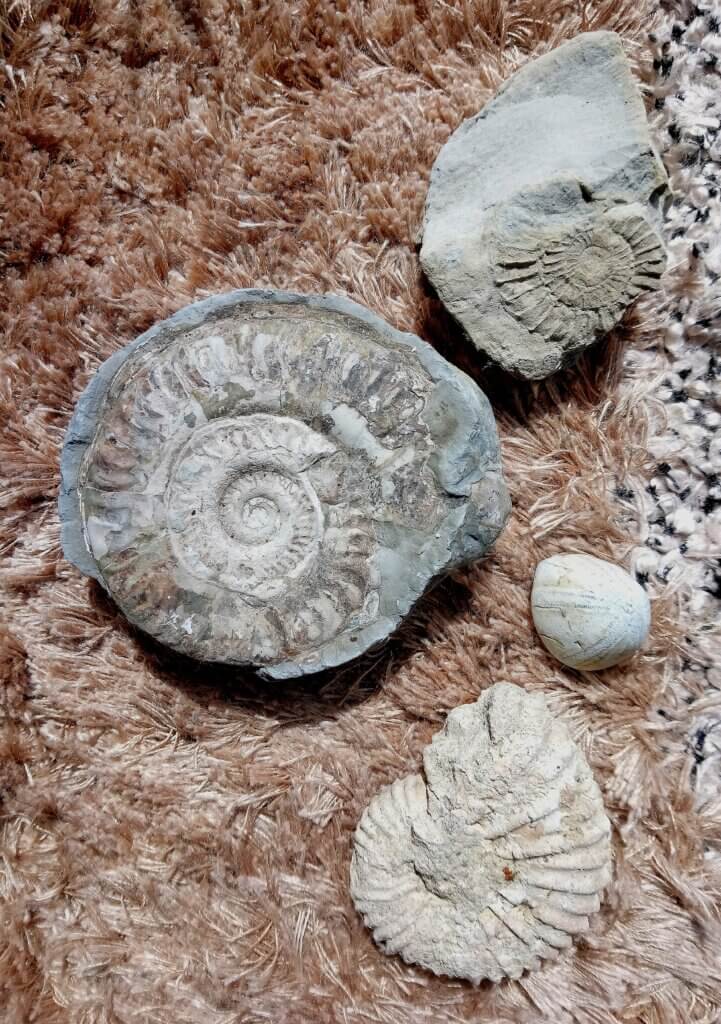
All of chalk is actually made up from fossils but the majority are very small ones. The Seven sisters’ area is world famous for its highly fossiliferous chalk, which is packed with a wide range of different echinoids (sea urchins often known as Shepherds crowns), brachiopods (symmetrical shells), bivalves (Oysters), ammonites (coiled shells), crinoids and sponges; less common finds include crustacean burrows lined with fish scales and starfish remains (among others). This is one of the best chalk locations in Europe for its variety of fossils and is recommended to all keen chalk fossil hunters.

Ammonite: “Ammonite Asteroceras” by Dlloyd is licensed under CC BY-SA 3.0.

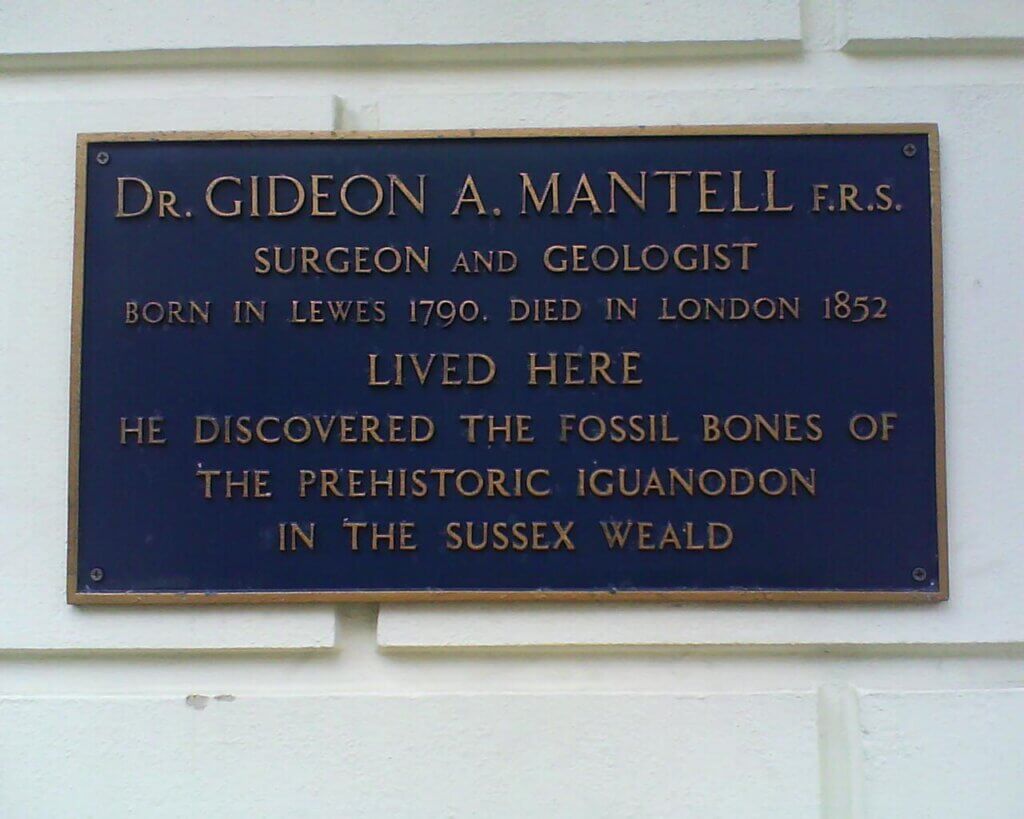
Doctor Gideon Mantell (3640608793).jpg" by Simon Harriyott from Uckfield, England is licensed under CC BY 2.0.

Also, in the area but just outside the chalk you can find petrified forests dinosaur bones and footprints, horsetail stems and other plants, and fish remains.

In fact the first known herbivore dinosaur, an Iguanodon, was found in slightly older Cretaceous rocks of the Wealden sandstone at Cuckfield just some 20 miles inland. The man who discovered it, Gideon Mantell, was born in a house in Lewes now inhabited by one of our Walk the Chalk volunteer tour guides!

At the end of the Cretaceous period around 65m years ago there was a mass extinction of many species (perhaps 75% of all species were lost) which we believe was due to asteroid impact in the Yucatan peninsula of Mexico. The Cretaceous saw the end of dinosaurs and ammonites amongst many other species on Earth. Only 13% of the chalk building coccolithophore species remained alive.

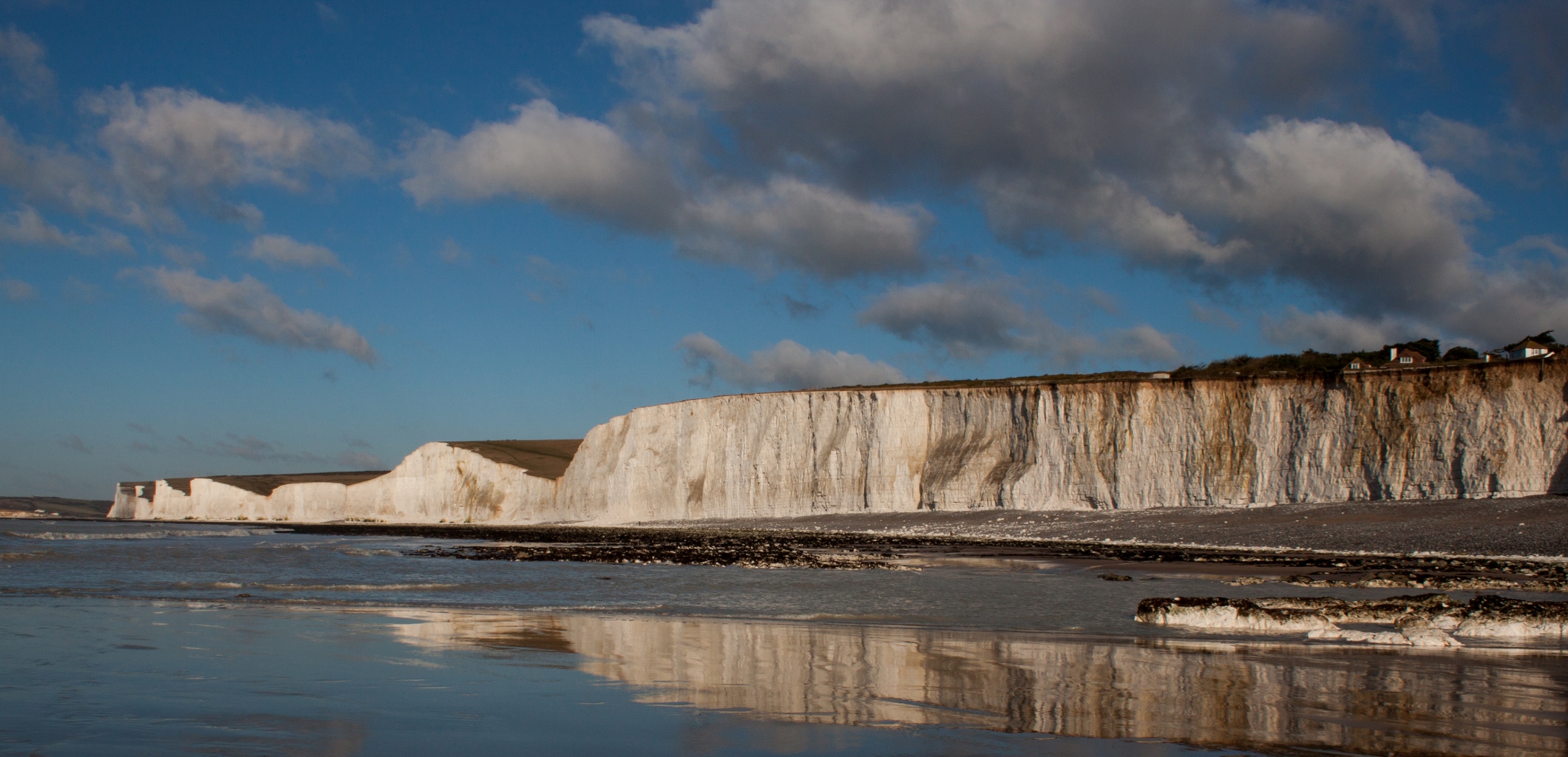
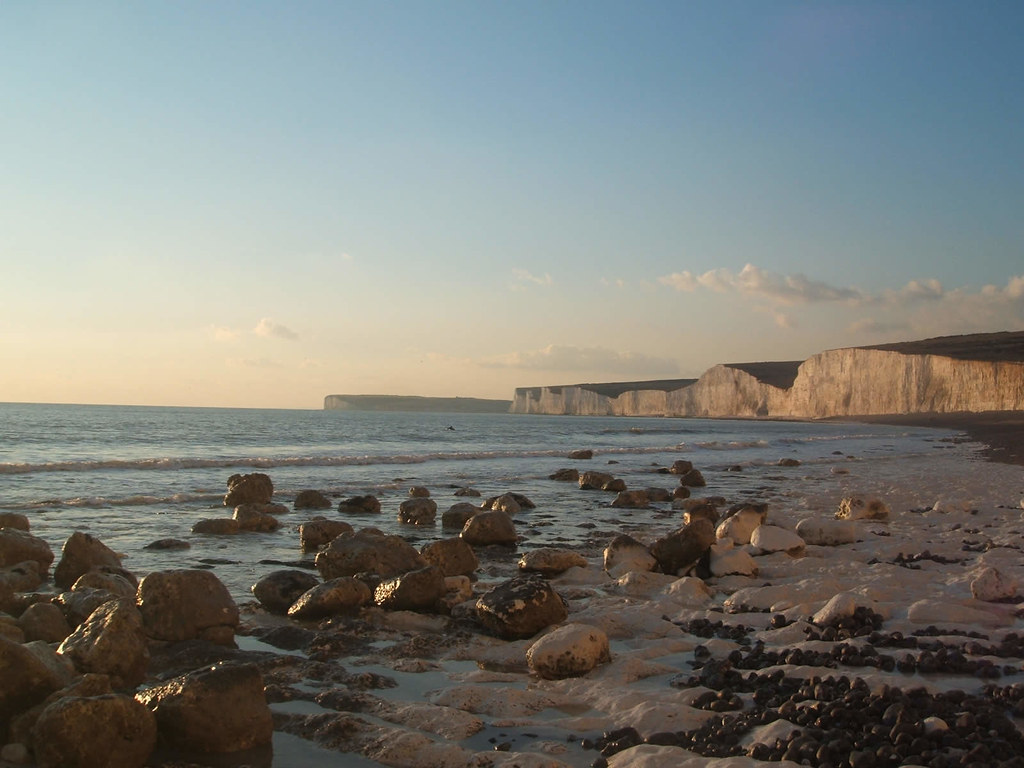
The most productive and safest place to search for fossils is on the Seaford and Seven sisters foreshore at low-tide. Chalk boulders and flint nodules are scattered along the entire stretch, providing a constant supply of fossils.

Seven Sisters from the beach by benaston is licensed under CC BY 2.0

Do not stand at the base of cliffs which are known to fall without notice. Having said that fresh falls are often a great source of fossils.

Please note the beach platform and cliffs are assigned SSSI status, which requires visitors avoid damaging (including hammering) the area. Collecting efforts should be directed towards the loose boulders and pebbles on the foreshore.

Safety first

As with all coastal locations, a fossil hunting trip is best timed to coincide with a falling or low-tide. Always allow plenty of time to return to non-tidal land before the tide comes in.

Equipment for fossil hunting: A good pair of walking boots will protect you from ankle sprains, provide more grip on slippery surfaces and keep you dry in wet conditions.

It’s a good idea to spend some time considering the tools and equipment you’re likely to require while fossil hunting.

Hammer: A strong hammer will be required to split prospective rocks.

Chisel: A chisel is required in conjunction with a hammer for removing fossils from the chalk

Safety glasses: While hammering rocks there’s a risk of injury from rock splinters unless the necessary eye protection is worn.

Strong bag: When considering the type of bag to use it’s worth setting aside one that will only be used for fossil hunting, rocks are usually dusty or muddy and will make a mess of anything they come in contact with.

Walk the Chalk fossils by Chris Cook
Seaford view by Ben124. is licensed under CC BY 2.0.

Chalk Artefacts

Chalk is not only an amazing source of fossils but also is soft and great for carving. Some of the first human artefacts found were carved from chalk some 4000 or more years ago. Why not try making an artefact of your own from chalk?

Content on this page has been kindly prepared for Walk the Chalk by Chris Cook.