
Seaford Head has been designated as a Scheduled Ancient Monument since 1938 due to the presence of an Iron Age Hillfort and a Bronze Age bowl barrow. Hillforts are a type of earthwork of varying shapes located on hilltops surrounded by either a single or multiple embankments. The fortified enclosures usually range in size from 1 hectare to 10 hectares and most date to the Iron Age (c.800 BC – AD 43). Seaford Head is a large univallate hillfort meaning that it is surrounded by a single earthwork. These are considered rare and so all surviving examples are considered to be of national importance. Univallate hillforts may have been used as centres of distribution.
The outline of the Fort can be seen at the centre of the image below when referenced with the OS map.
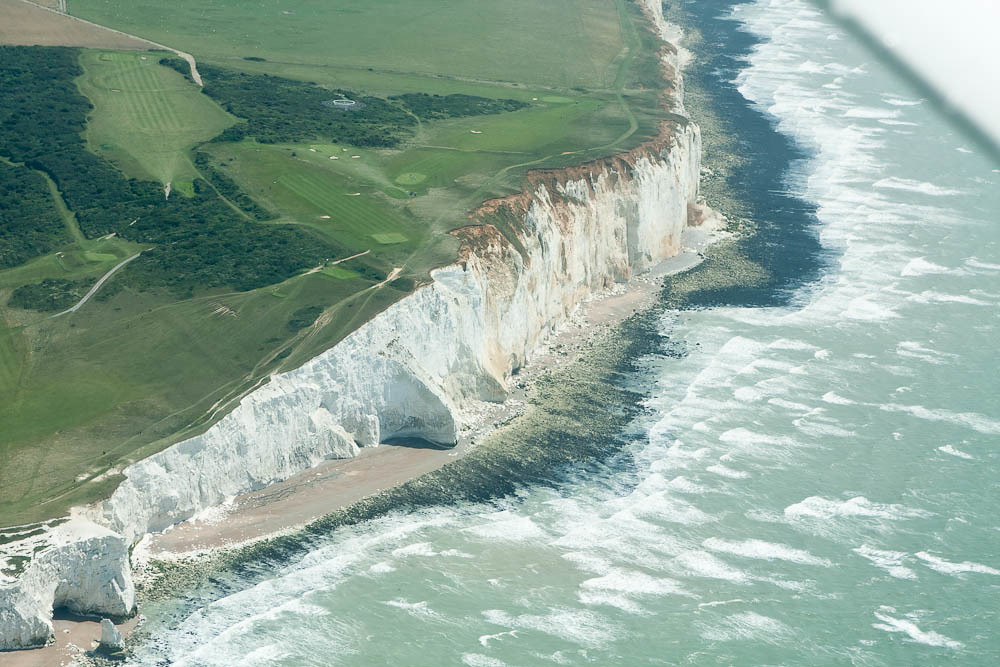
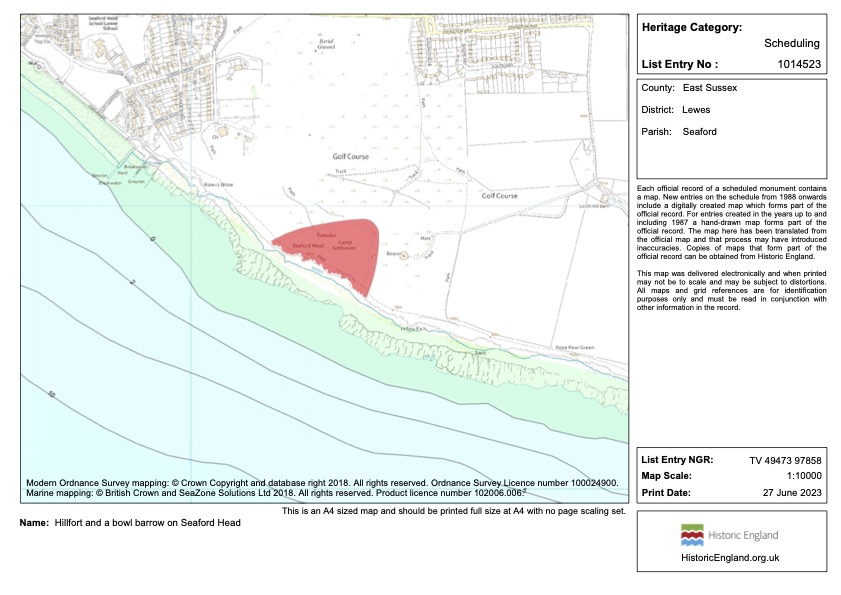
The area has sustained some damage due to coastal erosion and golf-course related activities but the remaining sections survive in relatively good condition. Small-scale archaeological excavation has revealed that this hillfort is an early example of this type of structure. It is believed that the defences were originally a complete circuit but as a result of erosion, the circuit is incomplete. The inner bank is approximately 10m wide and up to 3.5m high from the bottom of the ditch, making it a substantial structure. The embankment (rampart) has been damaged by Second World War actions, landscaping for the golf course and erosion from the coastal path. Early Iron Age pottery found at the bottom of the ditch indicate a date of 600-400 BC for the construction of the hillfort. Occupation debris found in the upper ditch dates to the Roman period and demonstrates that the site was reused. Aerial photographs taken just after the Second World War show buried remains of prehistoric roundhouses towards the centre of the monument.
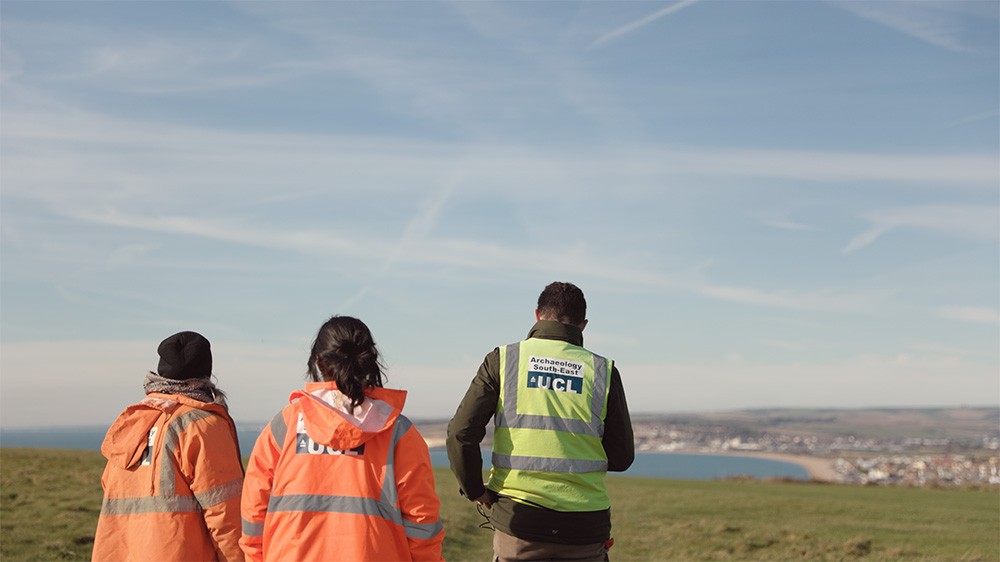
The most recent archaeological work on site took place in 2021/22, which was undertaken by Archaeology South East (ASE) with funding from Historic England and South Downs National Park Authority. No excavation was completed, but instead non-intrusive investigations took place using drones and photogrammetry, geophysical and magnetometer surveys.
View an introductory film and the results film below.
Seven Sisters writer in residence and Walk the Chalk creative Alinah Azadeh also produced a spoken word performance piece inspired by the archaeology on site and the story of the hillfort.

Seaford Head as a site is also woven into the history of archaeology, as Augustus Pitt-Rivers excavated the site as part of his tour of the Sussex coastal landscape and its hillforts. He raced to investigate the site in 1876, after hearing rumoured plans to blow up the cliff as a breakwater (the first such explosion took place in 1850, but recalling that failure, the authorities eventually thought better of repeating it). The area of the site he excavated is now lost to cliff erosion. You can find quoted extracts from Pitt Rivers records of his time excavating the hillfort here »